
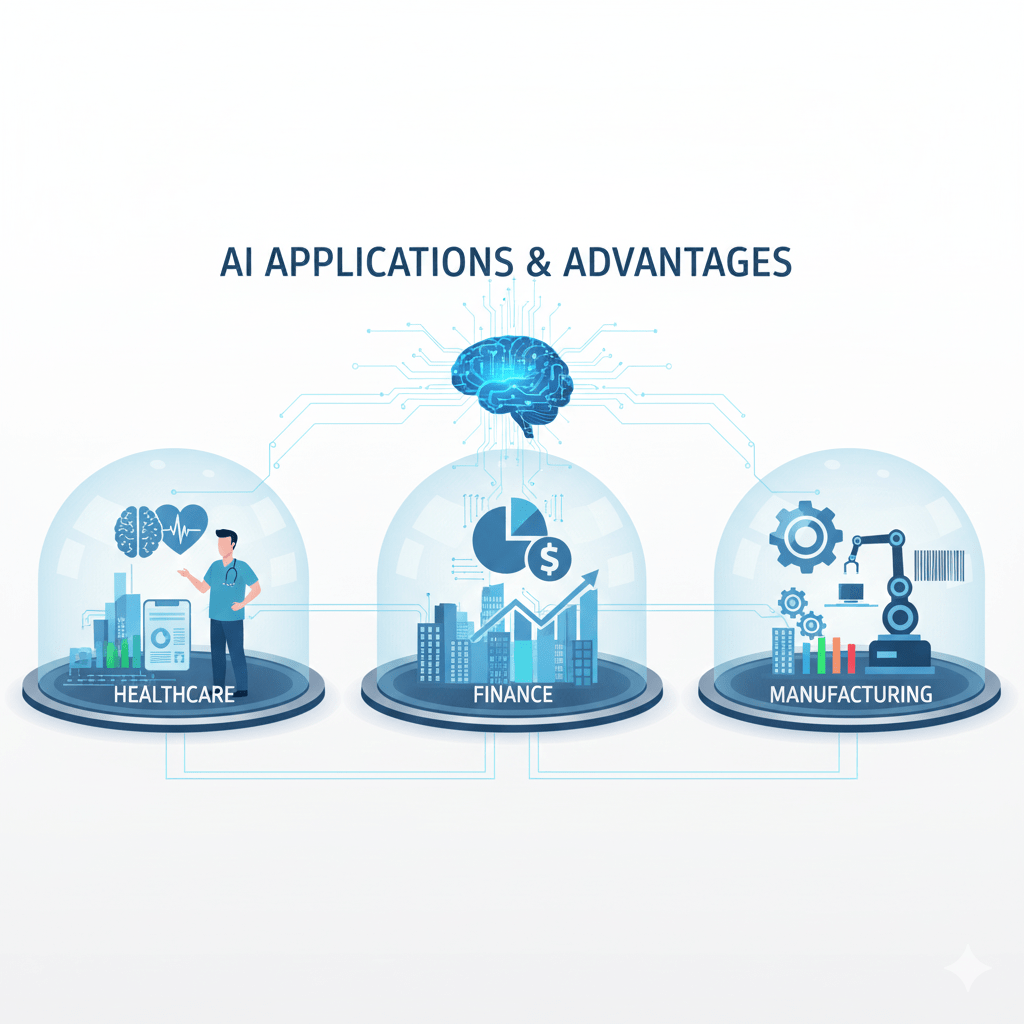
Artificial intelligence has evolved from a futuristic concept to a practical technology reshaping industries and solving complex problems at unprecedented scale. From automating repetitive tasks to unlocking insights from massive datasets, AI offers benefits that extend far beyond simple efficiency gains.
Enhanced Automation and Efficiency
One of the most immediate advantages of AI is its ability to automate complex tasks involving pattern recognition, decision-making, and continuous learning. In manufacturing, AI systems optimize production lines in real-time and predict equipment failures before they occur. Customer service operations deploy AI chatbots handling thousands of inquiries simultaneously while escalating complex issues to human agents.
The efficiency gains extend to resource optimization. AI algorithms minimize waste in supply chains, reduce energy consumption in data centers, and optimize logistics routes. According to McKinsey’s research on AI adoption, companies implementing AI see significant productivity improvements across operations.
Superior Data Analysis and Insights
AI excels at transforming massive data volumes into actionable insights. Machine learning algorithms identify patterns and correlations impossible for humans to detect manually. In healthcare, AI analyzes medical images spotting early disease signs with accuracy matching specialist radiologists. Financial institutions use AI to detect fraudulent transactions in milliseconds by recognizing anomalies across millions of data points.

The speed advantage proves crucial in fields like algorithmic trading and cybersecurity threat detection where delays of even seconds mean significant losses. IBM’s insights on AI analytics demonstrate how organizations leverage these capabilities for competitive advantage.
Personalization at Scale
AI enables businesses to deliver personalized experiences to millions of users simultaneously. Recommendation engines power personalized content on streaming platforms, while e-commerce sites display product recommendations tailored to individual browsing behavior, significantly increasing conversion rates.
Beyond commerce, personalization improves outcomes in education and healthcare. Adaptive learning platforms adjust difficulty based on student performance, ensuring optimal progress. Healthcare providers use AI to create personalized treatment plans considering genetic profiles, medical history, and lifestyle factors.
24/7 Availability and Consistency
Unlike human workers, AI systems operate continuously without fatigue. This constant availability proves invaluable for global businesses serving customers across time zones. AI-powered customer support provides assistance around the clock, while monitoring systems watch infrastructure constantly. The hardware powering these systems, from specialized AI computers and processors to cloud-based GPU clusters, enables continuous operation at massive scale.

Consistency is another key benefit. AI systems apply the same logic to every decision, eliminating variability from human judgment affected by fatigue or unconscious bias. This proves valuable in loan approvals, hiring processes, and medical diagnoses where fairness matters greatly.
Enhanced Decision-Making and Predictive Capabilities
AI augments human decision-makers with data-driven insights and predictions. By processing vast information and running complex simulations, AI helps leaders make more informed choices. In strategic planning, AI models forecast market trends and potential outcomes of different strategies.
The predictive capabilities prove especially valuable. Weather forecasting has improved dramatically with AI analyzing atmospheric data. Predictive maintenance in industrial settings saves billions by addressing equipment issues before failures occur. Google’s AI research showcases numerous applications where machine learning enhances prediction accuracy.
Cost Reduction and Safety Improvements
While AI implementation requires initial investment, long-term cost benefits often prove substantial. Automation reduces labor costs for repetitive tasks, and AI optimizes resource utilization across operations. Energy companies use AI to balance grid loads efficiently, while retailers optimize inventory levels to reduce holding costs.
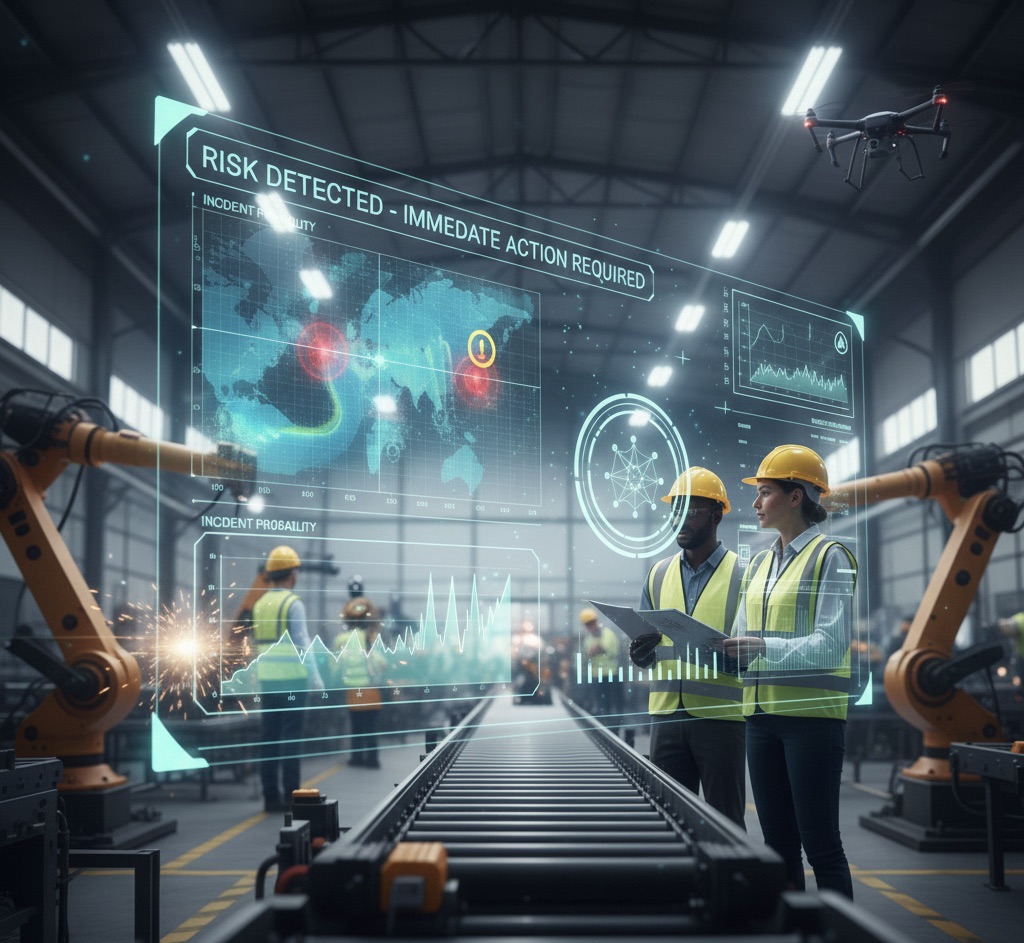
AI enhances safety by monitoring conditions and predicting hazards faster than human response times. Manufacturing facilities deploy AI systems that monitor safety conditions and shut down equipment when dangerous situations arise. Cybersecurity defenses powered by AI detect and block threats in real-time, adapting to new attack patterns as they emerge. According to MIT Technology Review’s AI coverage, these safety applications are among the most impactful AI deployments.
Frequently Asked Questions About AI Advantages
What are the main advantages of artificial intelligence?
The primary advantages of AI include enhanced automation and efficiency, superior data analysis capabilities, personalization at scale, 24/7 availability, improved decision-making support, cost reduction, enhanced safety, and scalability. AI excels at processing large amounts of data, identifying patterns, making predictions, and automating complex tasks that would be time-consuming or impossible for humans to perform manually.
How does AI improve business productivity?
AI improves business productivity by automating repetitive tasks, streamlining workflows, and reducing time spent on manual data processing. It enables employees to focus on higher-value strategic work while AI handles routine operations like data entry, scheduling, and basic customer inquiries. AI also accelerates decision-making by providing real-time insights and predictions, eliminating delays caused by manual analysis.
Is AI cost-effective for small businesses?
Yes, AI has become increasingly cost-effective for small businesses through cloud-based AI services and SaaS tools that don’t require large upfront investments. Small businesses can access powerful AI capabilities like customer service chatbots, marketing automation, and data analytics through affordable subscription services. Many AI tools offer free tiers or pay-as-you-go pricing that scales with usage, making them accessible even to startups and solo entrepreneurs.
What industries benefit most from AI?
Healthcare, finance, retail, manufacturing, transportation, and technology sectors see particularly significant benefits from AI. Healthcare uses AI for diagnosis, drug discovery, and personalized treatment. Finance leverages AI for fraud detection, trading, and risk assessment. Retail applies AI to personalization, inventory optimization, and demand forecasting. However, virtually every industry can find valuable AI applications relevant to their specific challenges.
Conclusion
The advantages of artificial intelligence extend across virtually every aspect of modern business and society. From automating mundane tasks to uncovering insights hidden in massive datasets, AI proves its value daily in countless applications. Organizations that successfully integrate AI while addressing challenges around data quality, bias, and transparency will be best positioned to leverage its transformative potential.
As AI capabilities continue advancing and costs decrease, the advantages become accessible to increasingly diverse organizations. Understanding these benefits helps businesses and individuals make informed decisions about where and how to apply AI for maximum impact.
 The Tech Land
Leave a comment